In the CELESTIAL CHURCH OF CHRIST, the way to worship, to pray, to come to the service, to purify oneself, to marry and to accompany the dead was given by the Holy Spirit to the Prophet OSCHOFFA. One thread links these practices: we come before a holy God, and we do not approach Him in just any way.
This guide is a starting point. It answers in a few lines the questions people ask about the life of the Celestial Christian, and each time points to the full teaching. To begin: Adoration: "Bow down", forehead to the ground.
The questions people ask
Why pray with the forehead to the ground?
Because no one can stand before the Lord. It is the daily adoration ("Seven times a day do I praise thee", Psalm 119:164), the sign that one submits entirely to God. So during the service, one of the faithful kneeling with their forehead to the ground is not made to get up.
"Bow down" or "Let us bow down"?
"Bow down" ("Prosternez-vous"). The hymn repeats the command the angel gave at Gethsemane, and the Prophet asked that exactly what the angel said be repeated.
How should one pray?
First prepare: repent, ask forgiveness, wash, come in simple, clean clothing. Begin with praise, enter through the Word, then listen, for prayer is a dialogue. The steps and a short prayer for every day: “Praying well: "Take all of me, give me all of you"”.
Can one wear a wig, jewellery or make-up?
The Prophet asked for sobriety and simplicity. The cassock has a revealed pattern, which is not altered, and wigs, excessively long nails or make-up have no place before the Lord. The details: “Sobriety, simplicity, punctuality: coming before God”.
Why insist on punctuality?
Out of respect for God. An elder who arrived late found his place taken, and the Prophet only said to him: "God does not give us our elevation late."
How long does purification after menstruation last?
Seven days. On the seventh, the woman washes all the linen she has touched; on the eighth, she goes to the parish for her bath of purification and sanctification. The linen is often forgotten, yet it is compulsory. Practical advice, and what is asked of husbands: “The purification of women after menstruation”.
Does the "union prayer" replace marriage?
No. There is no standard union ritual in the Church, and paid "union work" does not exist: the gifts of the Holy Spirit are not sold. The Prophet celebrated the Church's first marriage on 30 August 1975.
Can one marry someone who is not of the Church?
Yes. No one is obliged to marry in church, and one spouse may be a member without the other being one. The details: “Union and marriage: consult the Lord first”.
Where is the service over the body of the departed held?
At the cemetery, not at the house. At the house, the body is laid out, prayers are said, it is placed in the coffin, then the procession leaves, in step and in ceremonial dress. The ritual: “Funeral rites: the raising of the body and the last honour”.
Why does one not return to the parish after a burial?
Because the cemetery is an unclean place. The camails are placed in a basin, and the cross, the holy-water vessel and the censer are washed outside before going in.
Words to know
- Daily adoration: the prayer of each day, forehead to the ground, at the sound of the bell.
- Repentance: acknowledging one's faults and regretting them.
- Sanctification: making oneself pure for God, consecrating oneself to Him.
- Cassock: the garment of the Celestial Christian, wide and full, with gathers at the collar, the wrists and the waist.
- Ceremonial dress: festive dress, worn in particular to accompany the dead.
- Raising of the body: the moment when the procession leaves the house for the cemetery.
- The three holy objects: the cross, the holy-water vessel and the censer.
Reference books
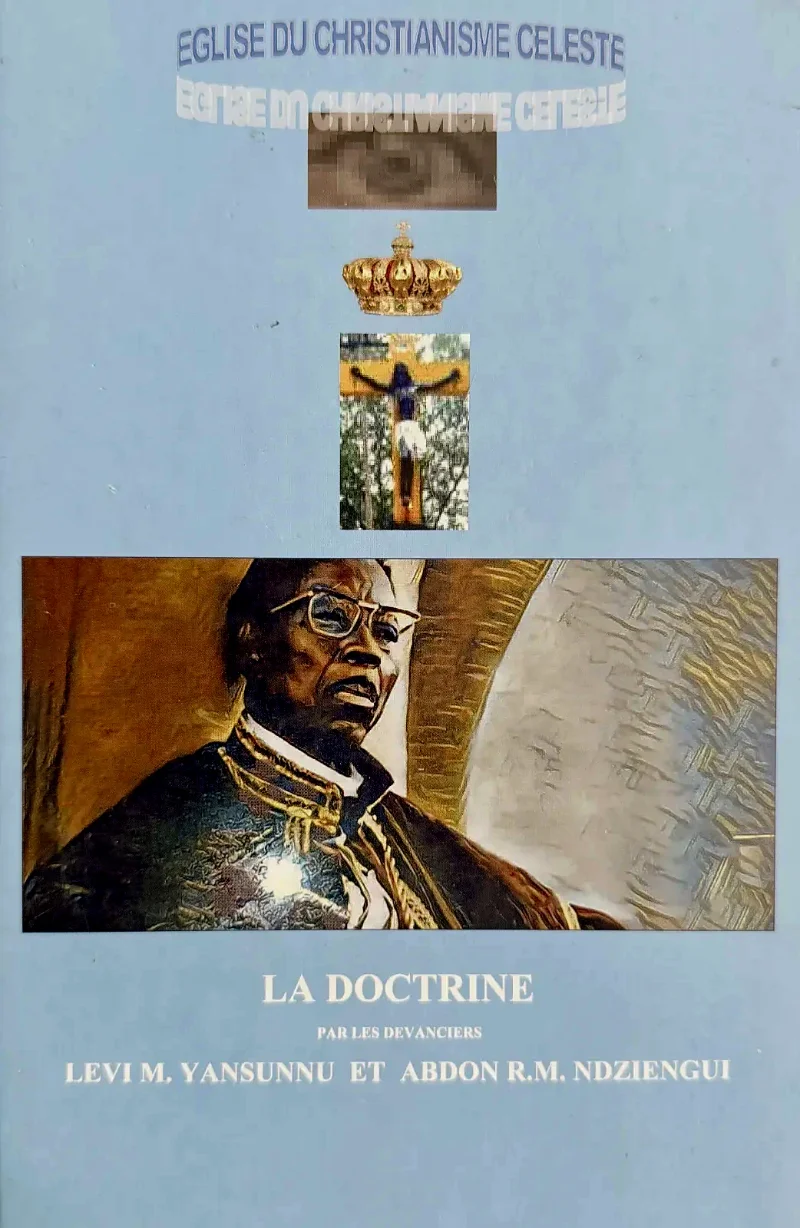
- La Doctrine: the recommendations and commands of the Holy Spirit to the Prophet OSCHOFFA, in a single volume;
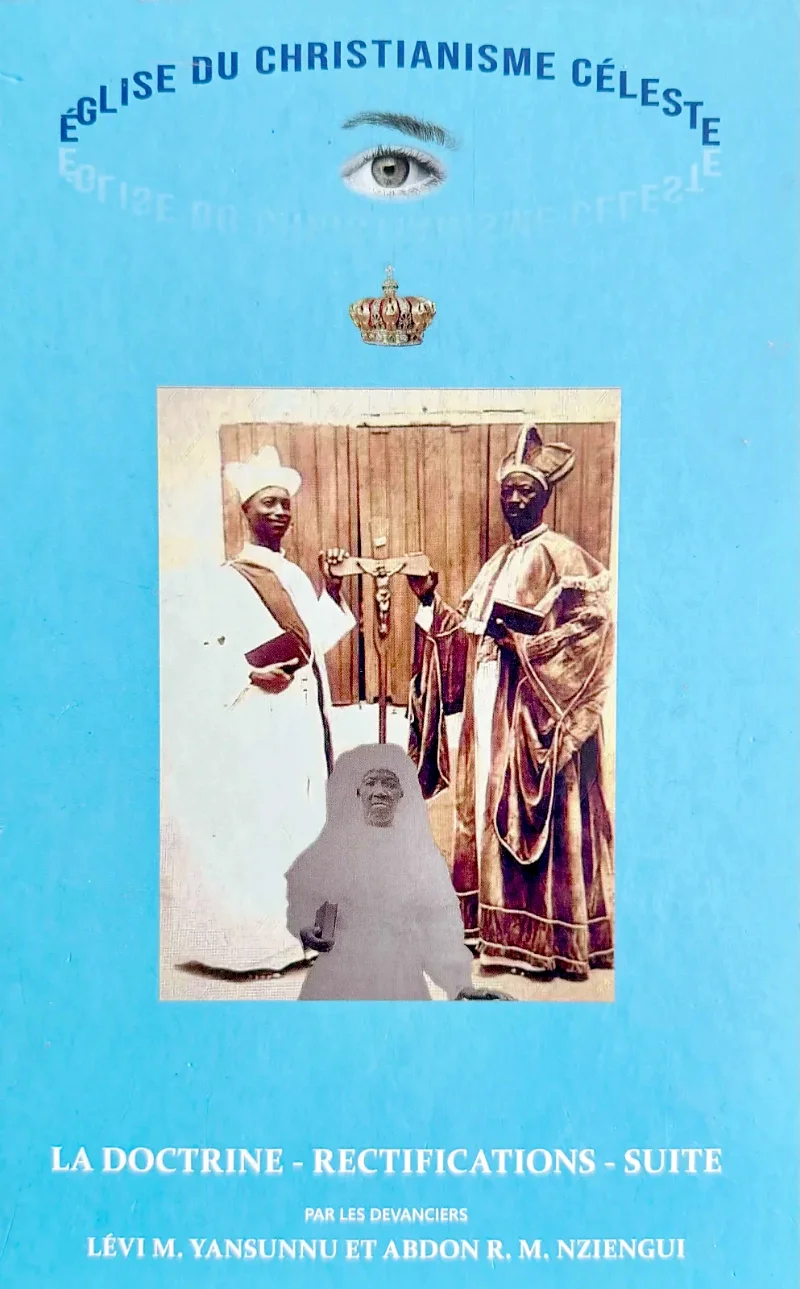
- La Doctrine – Rectifications: practices and services set right, as they were handed down;
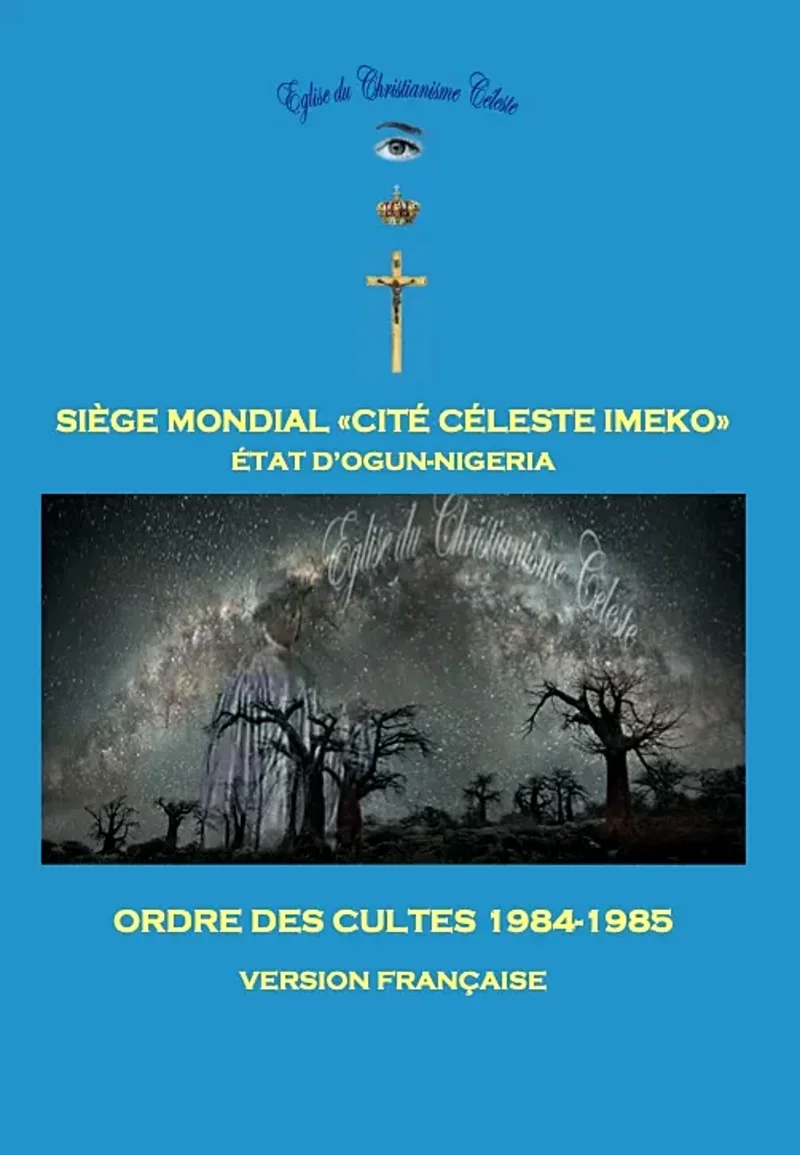
- Ordre des Cultes 1984-1985: the last order of services published by the Prophet, in December 1984 at Imeko.