The CELESTIAL CHURCH OF CHRIST (C.C.C.; in French, ÉGLISE DU CHRISTIANISME CÉLESTE, E.C.C.) was born on 29 September 1947 in Porto-Novo, in Dahomey, present-day Benin, at the height of the colonial period. That day, the Prophet-Pastor Samuel Biléou Joseph OSCHOFFA received the command to found it. Today it is present all over the world.
This guide is a starting point for those discovering the Church, or wanting to understand it better. It gives the dates of its beginnings, answers the basic questions, and each time points to the full teaching. To begin: 29 September 1947: the founding of the Church in Porto-Novo.
The dates of the beginnings
- 29 September 1947, at around 3 p.m.: in Porto-Novo, the future Prophet receives the command to found the Church.
- 5 October 1947: the first public service, and the first hymn, number 239.
- 8 October 1947: two moths throw themselves into a flame; in this way the Spirit announces how the Prophet's succession will take place.
- 9 October 1947: water brought back from the sea, at Sèmè, is to heal the sick.
- End of November 1947: the message of the annual pilgrimage is given.
- 1953: the Church's name is translated into Goun and Yoruba.
- 6 August 1961: the Prophet warns anyone who would seek to transform the Church.
- 1964: the first temple built of solid materials at the Supreme Headquarters in Porto-Novo.
- 1976: the International Headquarters is established at Kétou, near Lagos.
- 15 October 1983: consecration of the Celestial City of Imeko.
- 10 September 1985: the Prophet is called home to God.
The questions people ask
Who founded the Church?
The Prophet OSCHOFFA, and he alone. His life is told in the guide The Prophet OSCHOFFA.
Why was it founded?
Because those who called themselves Christians ran to fetish priests and magicians as soon as they had a problem. The future Prophet was to found a Church in which God alone is worshipped.
Where does its name come from?
It was written in chalk on a wall, in an arc, by a visionary who had never been to school, Papa NYANGA, after seven days and seven nights without moving. The story: “The Church's name and logo: an arc, not a rainbow”.
In which language should it be written?
First in French, "ÉGLISE DU CHRISTIANISME CÉLESTE", then beneath it in the language of the country, for example "Celestial Church of Christ". The word "Christ" must always appear in the translation.
What does the logo represent?
From the bottom up: a cross, a crown, an eye, then the Church's name in an arc. It is not a rainbow.
Which texts does its teaching rest on?
On the recommendations and commands the Holy Spirit gave the Prophet. The Church's Constitution, the Ordre des Cultes (Order of Services) and La Doctrine gather them together.
How was the Prophet's succession provided for?
From 8 October 1947: each person fulfils their mission, then enters the divine flame, and another comes after them. In 1965, the Prophet asked that prayers be said until the Spirit designated before all the one who was to succeed him, relying on article 111 of the Constitution.
Is it a sect?
No. The Prophet received the command to found a Church in which God alone is worshipped, in the name of Jesus Christ, on the Bible. No one is brought in by force, one leaves freely, and the Prophet taught that there are Celestial Christians outside the Church. Everything is explained in “Is it a sect? What the Founder taught”.
Must one belong to the Church to be loved by God?
No. Salvation is a personal matter, and God is the God of all. One comes freely to baptism, and one spouse may belong to the Church without the other doing so.
Words to know
- C.C.C. / E.C.C.: the abbreviation of the CELESTIAL CHURCH OF CHRIST, in English and in French.
- Supreme Headquarters: the mother house of the Church, in Porto-Novo. It is not called the "Holy See".
- International Headquarters: established by the Prophet at Kétou, near Lagos, during his years in Nigeria.
- Celestial City: Imeko, in Nigeria, where the pilgrimage is held.
- Diocese: the Church in a country or region, under the leadership of a head of diocese.
- Parish leader: the person first responsible for a parish.
- Visionary: the man or woman through whom the Spirit transmits visions, messages and hymns.
- Evangelist: a rank in the Church; Nathaniel A. YANSUNNU was the first to hold it.
Reference books
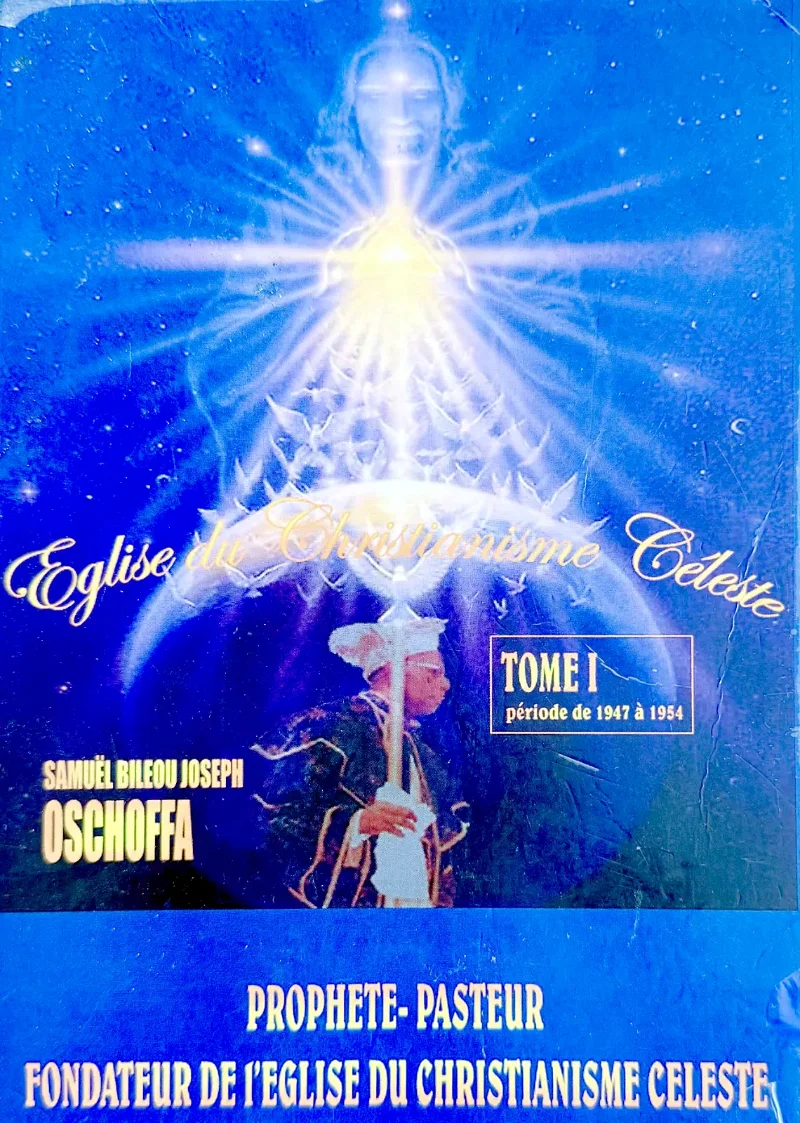
- OSCHOFFA – Tome I: the Church's first hours, told by a direct witness;
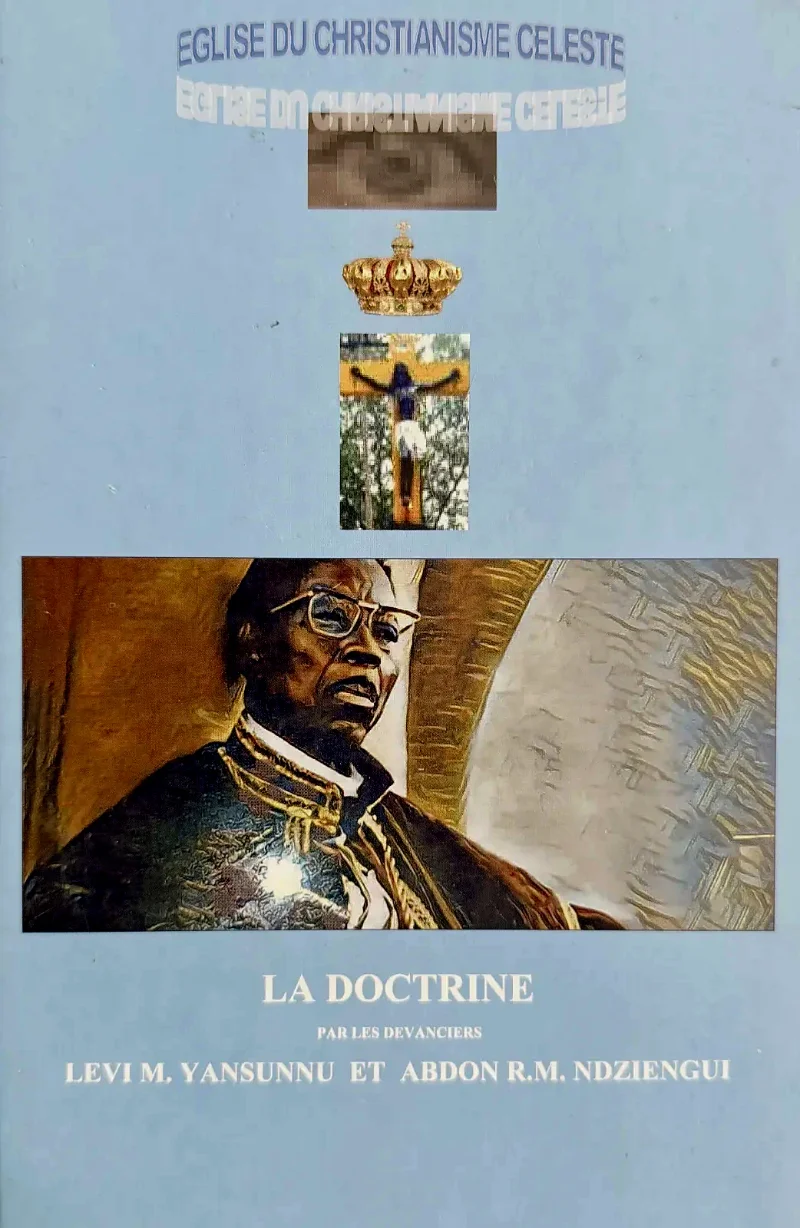
- La Doctrine: the recommendations and commands of the Holy Spirit to the Prophet, in a single volume;
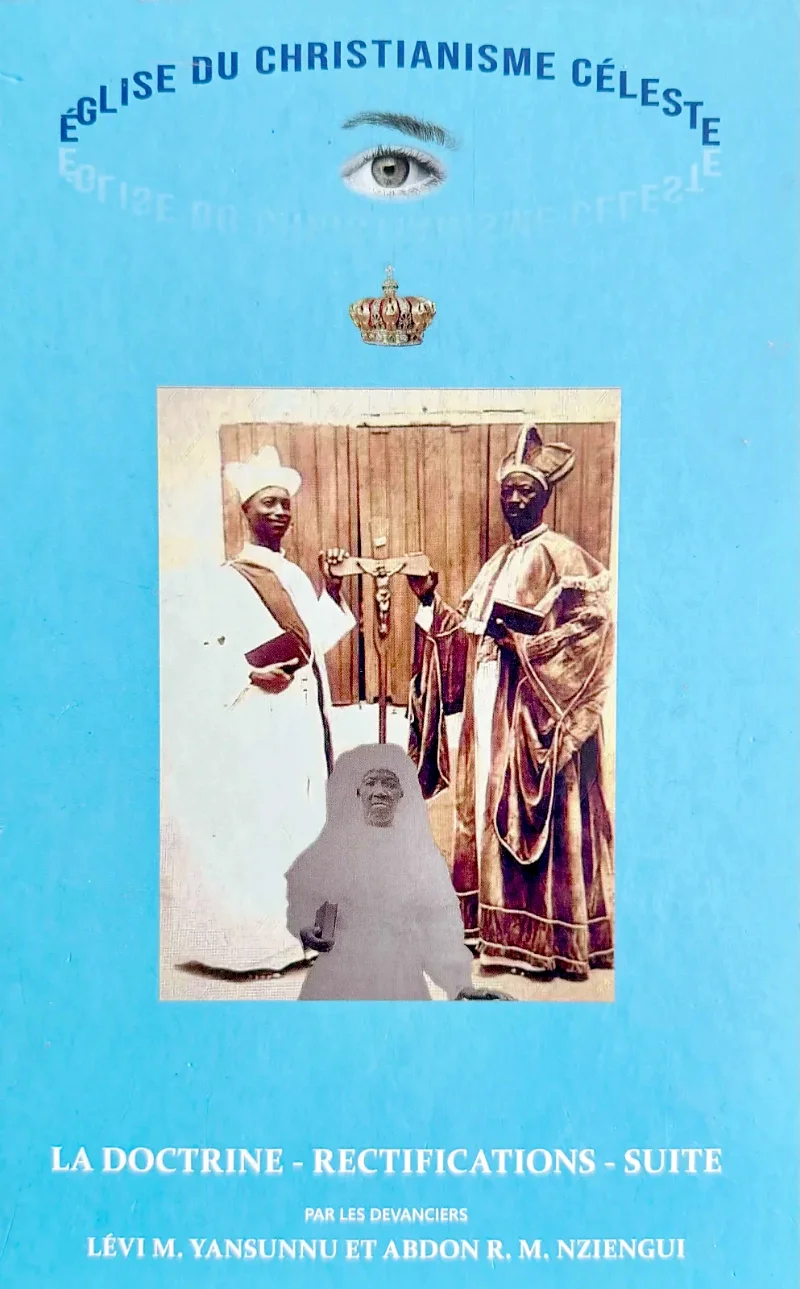
- La Doctrine – Rectifications: practices and services set right;
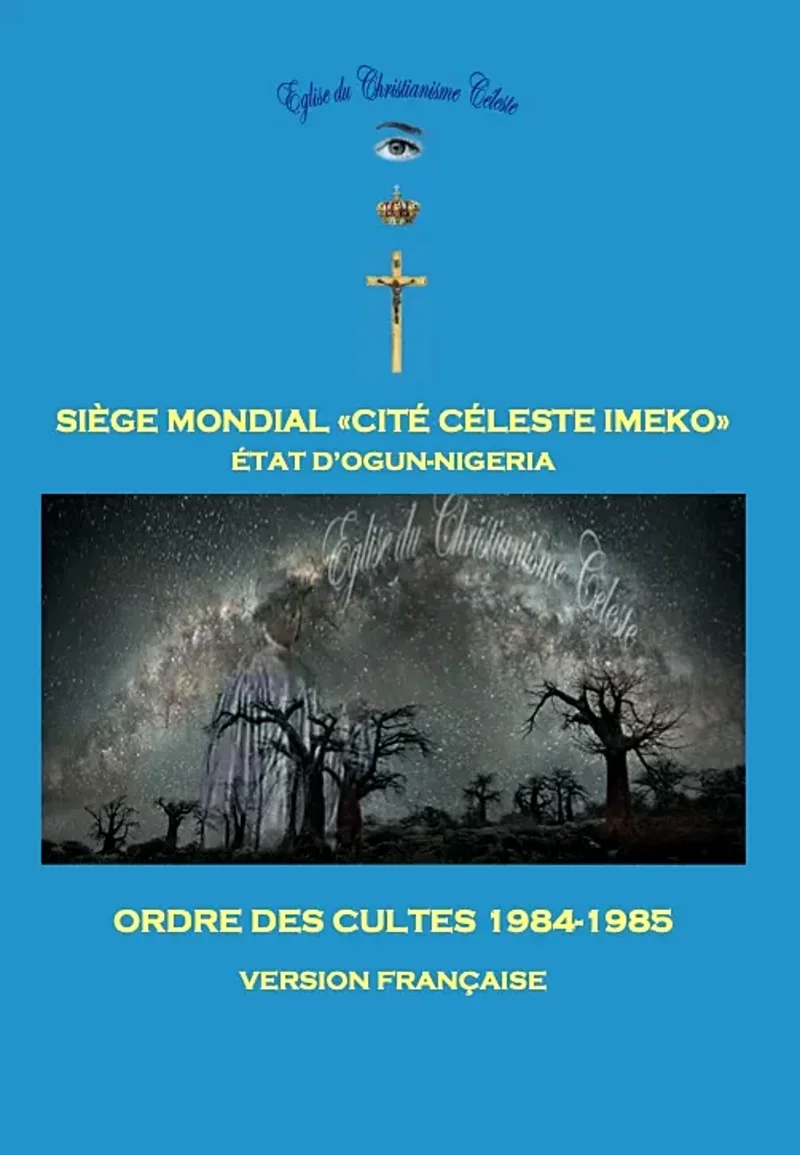
- Ordre des Cultes 1984-1985: the last order of services published by the Prophet.